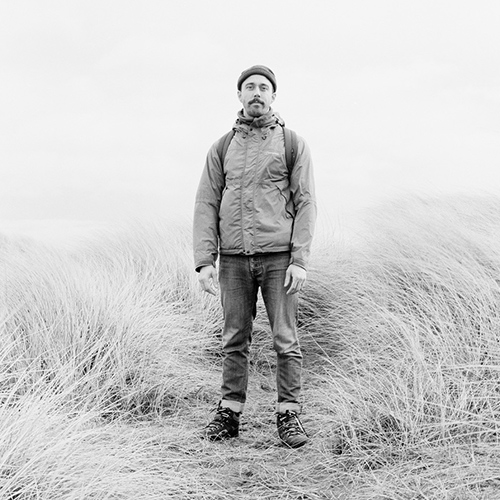
I am an artist and researcher whose practice spans experimental photography, installation, and site-specific performance. Raised in Stockton-on-Tees, an industrial town in the North-East of England, my work is shaped by a deep connection to northern landscapes and the shifting relationships between post-industrial environments and rural terrain.
Walking forms the foundation of my practice, functioning as both a creative act and a research method through which I engage slowly and attentively with the ground underfoot.
Through embodied journeys across landscapes in northern England, I explore how soil operates as a living system that holds unseen energies, microbial ecologies, and speculative networks. My practice-based research investigates how these hidden dynamics can be sensed, interpreted, and translated into artistic form, developing ways of listening to and articulating the subtle languages present within soil environments.
Currently undertaking a PhD at the University of Huddersfield, my research brings together experimental processes including analogue photography, earth batteries, and installation to examine the electrical and ecological energies present within living soil systems.
I have exhibited work across the UK for over fifteen years, and I am a Senior Lecturer in Photography at the Northern School of Art.
Autoethnographic Unearthing: The Language of Soil Voice
This practice-based research explores how artistic practice can start a conversation between humans and the living soil systems beneath their feet. Developed through durational walking across the landscapes of the North York Moors, Northumberland, and the Yorkshire Dales, the work engages directly with soil as a living ecological presence rather than a passive ground. Through embodied encounters with specific soil environments, the research investigates the microbial and energetic dynamics that constitute soil as an active system.
Using experimental methods including live earth batteries, underground audio recordings, and the burial of materials within soil, the work captures subtle bioelectrical activity generated by microbial life. These signals are translated through moving image, experimental photography, sound, and installation, allowing audiences to encounter processes that normally remain hidden beneath the surface. The resulting artworks transform microbial activity into a visual and auditory language that makes the invisible life of soil visible.
By translating soil activity into installation-based artworks, the practice creates a platform for dialogue between audiences and the non-human systems that sustain life. In this sense, the work initiates a conversation between human perception and the living processes of soil, while also opening a dialogue between artistic practice and scientific approaches to soil ecology.
Through an autoethnographic methodology of unearthing, the research demonstrates how embodied artistic practice can facilitate new forms of engagement with landscape, allowing soil to emerge not simply as ground underfoot, but as a communicative ecological presence shaped by place, history, and care.