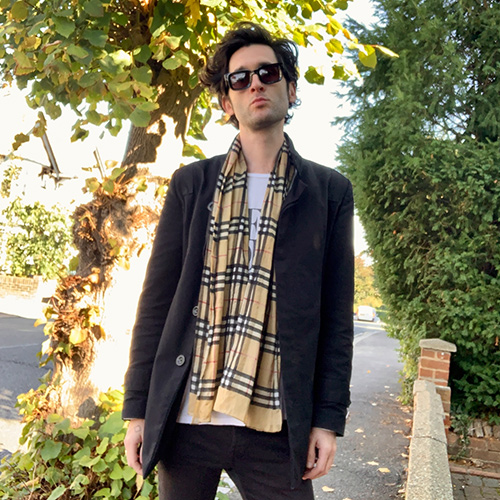
Summa cum laude graduate in art history from USAL. He completed a postgraduate degree in Educational Sciences and Social Communication (USAL).
He was an adjunct professor at the Department of Latin American Art Studies at the University of Salvador. He worked at Fundación PROA and was in charge of the Education Department of the Museum of Modern Art of Buenos Aires (MAMBA).
In 2014, he was selected as a fellow for the Museum Management Laboratory of Fundación TyPA, and in 2015 for the “Regeneration and Community Partnerships” program at Tate Modern (London).
In 2016, he received a Getty Foundation scholarship to attend the American Alliance of Museums Annual Conference in Washington DC and took part in the Internship Program at the Metropolitan Museum of Art (MET) in New York.
In 2021, he was selected alongside various professionals from across Latin America to become a trainer for the Nesta/BID program.
In 2023, he was part of the team behind the project that won the Grand Prix at the Cannes Lions International Festival.
Since 2024 he has been a constant figure at prestigious conferences such as Museos en el Medio, Educate for Life, Museums Next, Museum ID, The Presenter Network and TEDx. He currently leads the Department of Education & Creative Content at the Friends of the National Museum of Fine Arts Association.
Mi Casa – Su Casa
Presentation with Luz Arriaga
Let’s begin with a striking urban paradox: Argentina’s most important public museum stands in Recoleta, the country’s wealthiest neighborhood, just three blocks from one of Buenos Aires’ largest informal settlements, Villa 31. Between these contrasting realities rises the National Museum of Fine Arts—a monumental, temple-like structure that physically and symbolically occupies the space between worlds.
This presentation examines how a public museum can act as a conversational bridge within a deeply unequal social landscape. In a country marked by recurring economic instability and fluctuating cultural policy, the challenge is not only to preserve heritage but to activate it—transforming the museum from a space of passive contemplation into one of meaningful dialogue and participation.
What conversations can a museum initiate when its immediate surroundings reflect stark social divides? Who feels invited to speak? Who feels welcome?
Drawing on a unique educational program developed by the museum’s Friends Association, this talk explores strategies that reposition the institution as a shared civic space. Through workshops, community-led initiatives, and inclusive pedagogical approaches, the program fosters encounters where art becomes a medium for exchange—between neighbors, across social boundaries, and among diverse cultural identities.
Rather than asking audiences to adapt to the museum, the project asks the museum to adapt to its audiences. It invites participants not only to interpret artworks, but to see themselves as active contributors to an ongoing cultural conversation.
Ultimately, this case study proposes that democratizing access is not enough; museums must cultivate belonging. If art is to truly start conversations that matter, institutions must first create the conditions for people to feel that the conversation is theirs.
Only then can we begin to say: Mi casa – su casa.