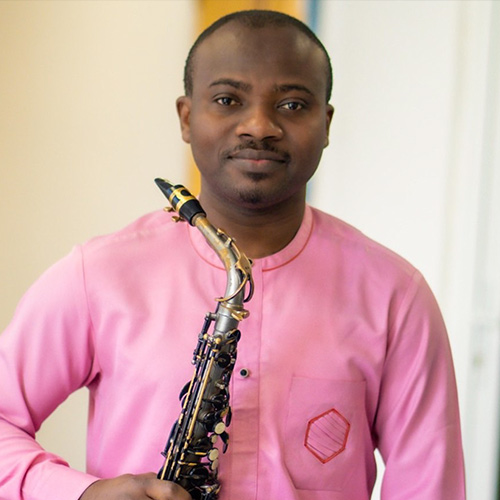
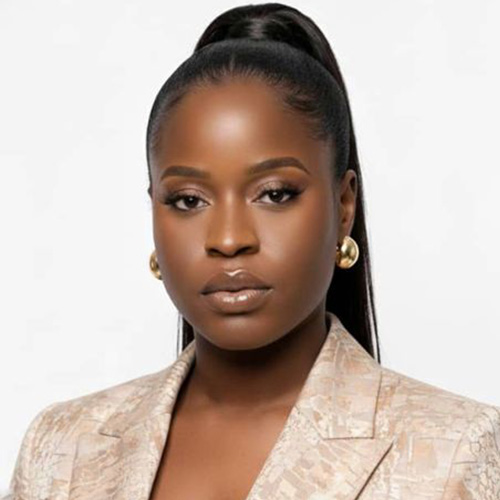
Samuel Ogundapo’s journey into music did not begin with a grand declaration. Growing up in Nigeria, his early exposure to music came through church environments where sound was communal and participatory.
Over time, his curiosity expanded. The saxophone became central, not just as an instrument but as a voice. He plays four (4) musical instruments, yet this multi-instrumental ability is not about range for its own sake.
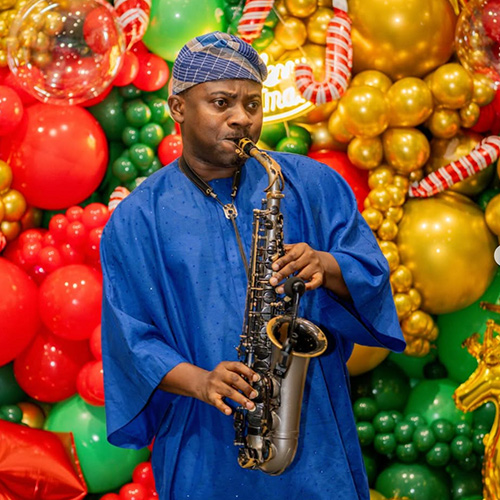
Samuel academic path appears, at first glance, to sit outside the creative. Alongside music, he completed two master’s degrees. He studied Information Technology at the University of Lagos and Project Management at the University of Bradford and this foundation plays a quiet but critical role in how he works today.
At the core of his current work is a clear focus on mental health advocacy, expressed not through campaigns or slogans but through practice. Much of his time is spent working with children, particularly those with special needs. In these settings, music is not treated as entertainment. It becomes a tool for regulation, expression, and comfort.
Samuel works closely with care homes, collaborating with activity teams to integrate music into daily routines. These sessions are often simple in structure but intentional in design. Live instrumentation, especially piano and saxophone, is used to create calming environments where individuals can respond at their own pace. He also organises music exposure experiences for children and classes for young adults and adults.
This work extends into structured community impact through his role as co-founder of Creative Health, Art and Culture CIC (CHAC CIC). The organisation operates as a community interest company focused on improving wellbeing, strengthening communities, and empowering creatives.
Across all of this, there is a consistent philosophy that shapes his approach. Music, in his view, does not wait for permission. It enters, settles, and interacts with the body in ways that words often cannot; interacting with emotion, memory, and sensation all at once.
Samuel Ogundapo’s work, taken together, reflects a practice that is consistent in intention even as it moves across different spaces. Music is not just heard. It is experienced, processed, and, in many cases, felt long after the sound itself has faded.
MusicArt Therapy: Activating Non-Verbal Dialogue Through Sound and Visual Expression
Workshop, with Olubunmi Elizabeth Ebisemiju
Art has long served as a medium for expression, yet the challenge of articulating internal emotional states remains a barrier for many individuals engaging with traditional conversational spaces. This paper and participatory workshop introduce MusicArt Therapy—an interdisciplinary, process-led approach that combines live saxophone performance with guided visual art-making to activate non-verbal dialogue and emotional exploration.
Developed within a creative health framework, MusicArt Therapy positions art not as an outcome, but as a live conversational system. Participants engage in a structured, immersive experience where shifting tonal qualities of live saxophone music—ranging from solemn to upbeat, slow to intense—act as emotional cues. In response, participants create intuitive visual marks with eyes closed, allowing sound to guide gesture, rhythm and expression without cognitive interruption.
The process generates highly individual yet interconnected visual outputs, which become entry points for reflection and shared dialogue. By externalising internal states through sound and form, participants are able to access and communicate emotions that may otherwise remain unarticulated.
This approach builds on lived experience of how the combination of both music and visual art helped us and many others steadily recover from past trauma and had helped many relieve built-up stress. It also stems from prior successful participatory work delivered within institutional settings, including a large-scale interactive art
performance for University Mental Health Day in London, and is further being explored through an upcoming focus-group creative wellbeing retreat in the Lake District. These contexts provide a foundation for examining how interdisciplinary art practices can foster safe, inclusive spaces for emotional engagement.
Positioned within the broader discourse of art as a catalyst for conversation, this session contributes a replicable model for integrating performance, visual art and audience participation. It proposes MusicArt Therapy as an innovative approach to expanding how art initiates dialogue—within individuals, between participants, and across communities.